
Please submit your details below and we will be in touch soon.

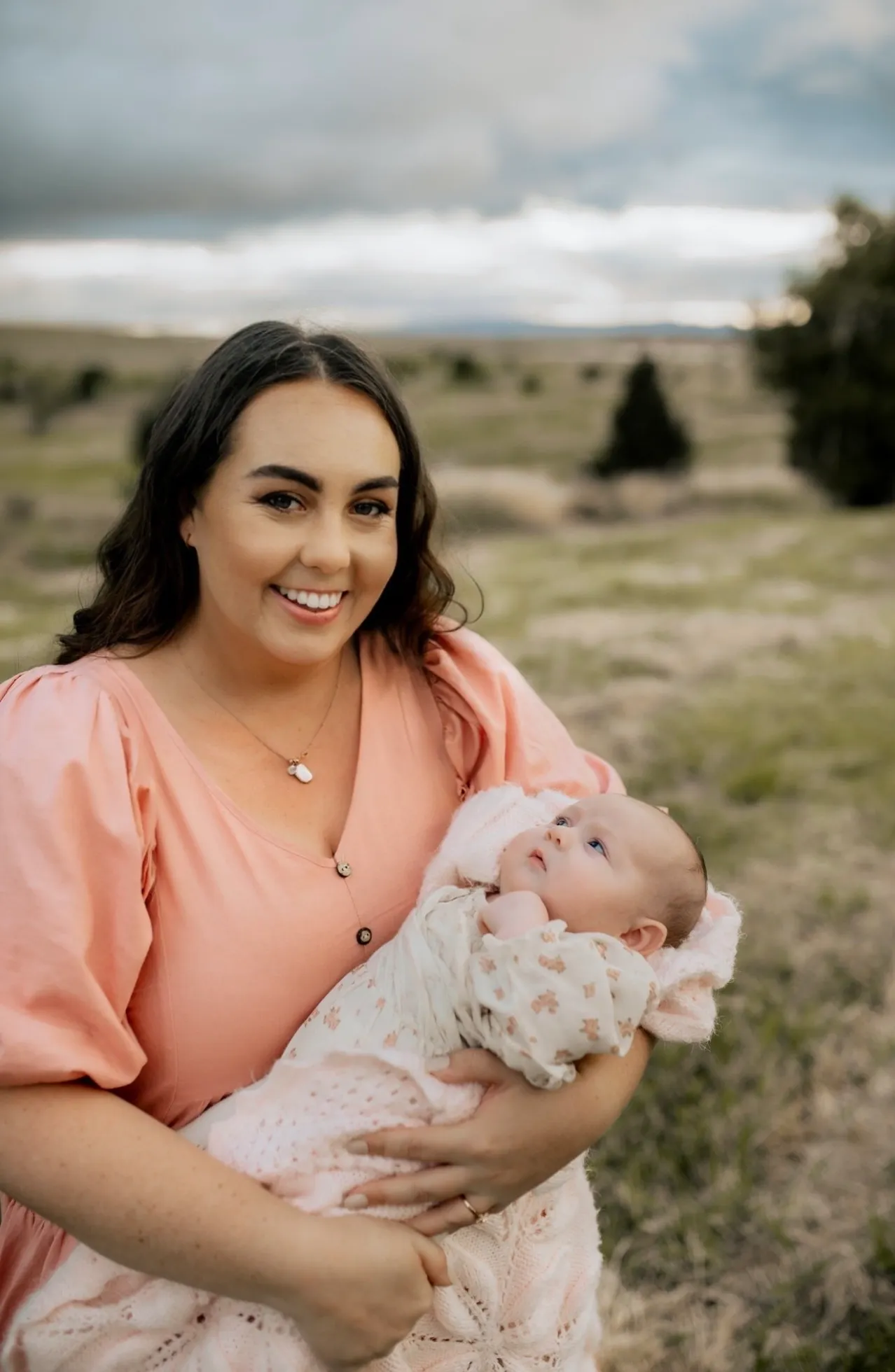
In remote WA, I found out I was pregnant with our second child. What should have been a purely exciting time for our family of three was shadowed by reality, we were living incredibly remotely, over 5,000km away from family and friends, and far from major hospitals.
After finishing our year working on a cattle station, we made the decision to move back home to Queensland so we could safely welcome our daughter into the world. My pregnancy was somewhat easier than my first at 19 years old, but it still came with complications, gestational diabetes and what doctors described as an ‘irritated uterus’, which left me in and out of hospital thinking I was in early labour. I was encouraged to try for a vaginal birth after caesarean (VBAC) and was told I was the perfect candidate.
At 38 weeks, my waters broke and I was induced. After 10 hours of labour and nearing 10cm dilated, my daughter went into fetal distress which would settle when I changed positions but then return. I began experiencing pain that felt different from contractions. When it was time to push, her heart rate dropped again and wouldn’t recover. She was stuck with shoulder dystocia. After multiple position changes, an episiotomy and forceps, she was delivered, needing resuscitation.
What I didn’t know at the time was that I was haemorrhaging. I was taken to theatre to remove a retained placenta. I remember saying goodbye to my very distressed husband. I was lucky I got to hear my baby daughter cry before surgery. I kept repeating to myself, “Don’t fall asleep.” I could see the urgency in everyone’s faces. I heard, “Stay with us, Natalya”. I was asked if they could remove my uterus if it meant saving my life. All I could think was, stay awake or you’ll die. And then someone told me it was okay to go to sleep.
I had suffered a complete uterine rupture and lost 4.5 litres of blood. I was placed into a medically induced coma and put on life support. My husband and family were told I could be in ICU for a week. My husband was so worried to tell our 5 year old daughter - how do you explain to your child what’s happening?
When I woke up, it felt like an out-of-body experience. I was surrounded by machines. The woman next to me had a tower of equipment. A man across from me was intubated. It didn’t feel real. Somehow, by the next day, I was awake and extubated … something many hadn’t expected. I spent just under a week recovering in hospital. Though my uterus was repaired, I was advised against future pregnancies.
I had survived. But mentally, I was unravelling.
I had never struggled with mental health before. I had always been easy-going, resilient, steady. But once I was home, I couldn’t sleep. Every time I drifted off, I would hear myself say, “Don’t fall asleep”. I had flashbacks. I was snapping at the people I loved most. I was consumed by anxiety, especially around health. A small infection in my surgical scar felt catastrophic in my mind. My body had survived something traumatic, but my nervous system didn’t know it was over.
When my daughter was hospitalised at six months old with respiratory syncytial virus (RSV), my fight-or-flight response went into overdrive. Sitting beside her hospital bed brought everything rushing back. The sounds. The machines. The fear of losing someone you love.
Through the support I received at Gidget Foundation Australia, which included Eye Movement Desensitization and Reprocessing (EMDR) therapy, I slowly began to untangle the trauma. I learned that my reactions weren’t weaknesses, they were my brain trying to protect me. I learned grounding techniques, how to interrupt spiralling thoughts, how to separate memory from present reality. I learned that anxiety can be loud without being truthful.
One of the hardest beliefs to challenge was the idea that good things don’t happen without consequences. My birth trauma had quietly rewritten that story in my mind. If something felt joyful, I braced myself for disaster. But healing changed that.
A year later, when my daughter was hospitalised again with lung complications, I didn’t immediately assume the worst. I was still scared, but I was steady. I was able to be present for her instead of being consumed by what-ifs. Not long after, I married the father of my girls. Standing there on our wedding day, I realised something had shifted. I wasn’t waiting for something terrible to happen. I wasn’t scanning the room for danger. I was able to truly enjoy it, to feel the joy fully and believe, maybe for the first time in a long time, that good things can happen to me.
Two years on, my physical recovery still reminds me of what happened. But mentally, I am stronger. I understand my triggers. I recognise when anxiety is speaking instead of reality. Healing hasn’t been linear, and it hasn’t been quick, but it has been transformative.
Today, I am not just surviving what happened to me. I am living. I am present with my daughters. I can sit in joy without fearing what comes next. And that, to me, is the greatest measure of healing.
Natalya's Story
Please submit your details below and we will be in touch soon.
Related Fact Sheets


Related factsheets



a new mum's story
this Christmas



%5B90%5D.webp)







Urgent Help is Available



%201.webp)