Please submit your details below and we will be in touch soon.
My story starts young. At 18 years old, I had my first laparoscopy and was diagnosed with endometriosis. I remember my doctor sitting me down and asking, “Do you want to be a mum? If you do, don’t wait.” Those words stayed with me.
Fast‑forward to age 25. After two more laparoscopies and newly married, my husband and I felt ready to try for a family. After nearly a year of monthly heartbreak, we finally fell pregnant. All I felt was relief. Everything was going smoothly until, just before 30 weeks, I was diagnosed with Cholestasis. The stress and anxiety of the unknown were almost unbearable. I spent hours each week in hospital alone (thanks to COVID) getting blood tests, scans, and monitoring.
At 36 weeks, the decision was made to induce. On Valentine’s Day, my husband and I arrived at the hospital to begin the process. The next day, after almost everything went wrong during induction, I was taken for an emergency caesarean. When my son was born, I heard him cry then I heard the words that still haunt me: “Baby needs NICU.” An alarm sounded. Within moments the room filled with doctors and nurses, and my baby and husband were gone. I watched them leave as I lay helpless on the table.
In recovery, nurses congratulated me, but I didn’t feel like I had just had a baby. I was so used to abdominal surgeries that it felt like I was simply recovering from another laparoscopy. Nearly three hours later, I was wheeled up to meet him. Seeing him lying in a NICU cot covered in wires, I was scared to touch him, scared to fall in love with him because what if he didn’t make it? At that stage, the doctors still didn’t know why he couldn’t breathe on his own. We went back down to the maternity ward without our baby, and that was the beginning of me shutting down.
Over the coming days I struggled. I didn’t get to hold him until nearly 30 hours after he was born. We didn’t do skin to skin, I didn’t feed him, and we didn’t change his nappies. All the experiences you’re promised before birth, we didn’t have. I felt like the outside world knew my baby just as much as I did so I didn’t talk to anyone. I became a shell of myself, just trying to stay afloat. I was terrified of going home without my baby abut I couldn’t keep enduring the heartbreak of hearing other babies cry in the maternity ward when mine had never left NICU. So I came home without him.
He spent nearly three weeks in NICU before he was strong enough to come home. I was excited but absolutely terrified. Now it felt like it was solely my responsibility to keep him safe. With COVID restrictions and all of our family interstate, we were completely alone navigating this new life. I didn’t feel good enough to be my baby's mum, and this is when I truly began to drown.
From the outside, we looked like a beautiful young family living the dream. On the inside, I second guessed everything. I felt alone. I felt ashamed that I couldn’t breastfeed. I grieved the early moments we missed. I sobbed every time I showered, then got dressed and put on the mask I thought would shield everyone from my despair.
I genuinely don’t know if I’d be here writing my story without receiving support from my Gidget Clinician. My appointments became an escape from the chaos in my head. They were heavy, and each one peeled back another layer I had been hiding, but they were also the only place I felt completely safe and understood. Even on the days when everything felt too big and too overwhelming, I knew I had someone in my corner who saw me and believed me.
Some of the scariest words I’ve ever said came out during an appointment with my Gidget Clinician: “I don’t want to hurt myself, but if something happened to me, I’d be okay with it.”
The voices in my head were loud, warning me what might happen if I spoke my truth. But when I finally said the words out loud, they quietened. My Gidget Clinician looked at me and said, “I know, and I believe you.” Having someone support you wholeheartedly, the way she did can be life changing.
During my time with Gidget Foundation Australia, I was diagnosed with Postnatal Depression and Anxiety, Generalised Anxiety Disorder, and Complex Post‑Traumatic Stress Disorder. I bravely fought through two severe depressive episodes.
I love the ocean, and to use an ocean analogy: I felt like I was out in the middle of a storm, drowning as waves crashed over me, until Gidget Foundation Australia came along and threw me a lifebuoy. I will always be grateful for that lifebuoy.
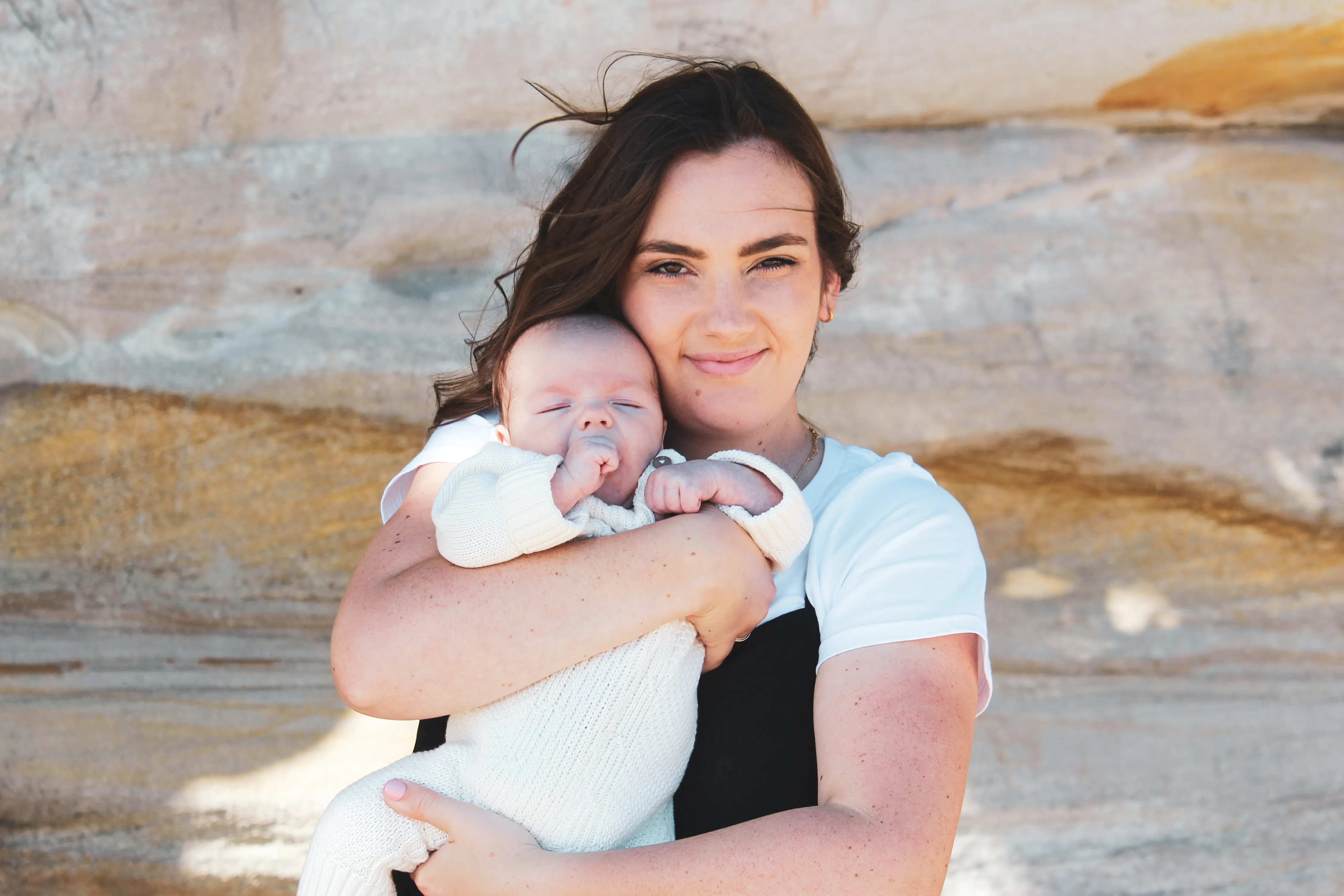
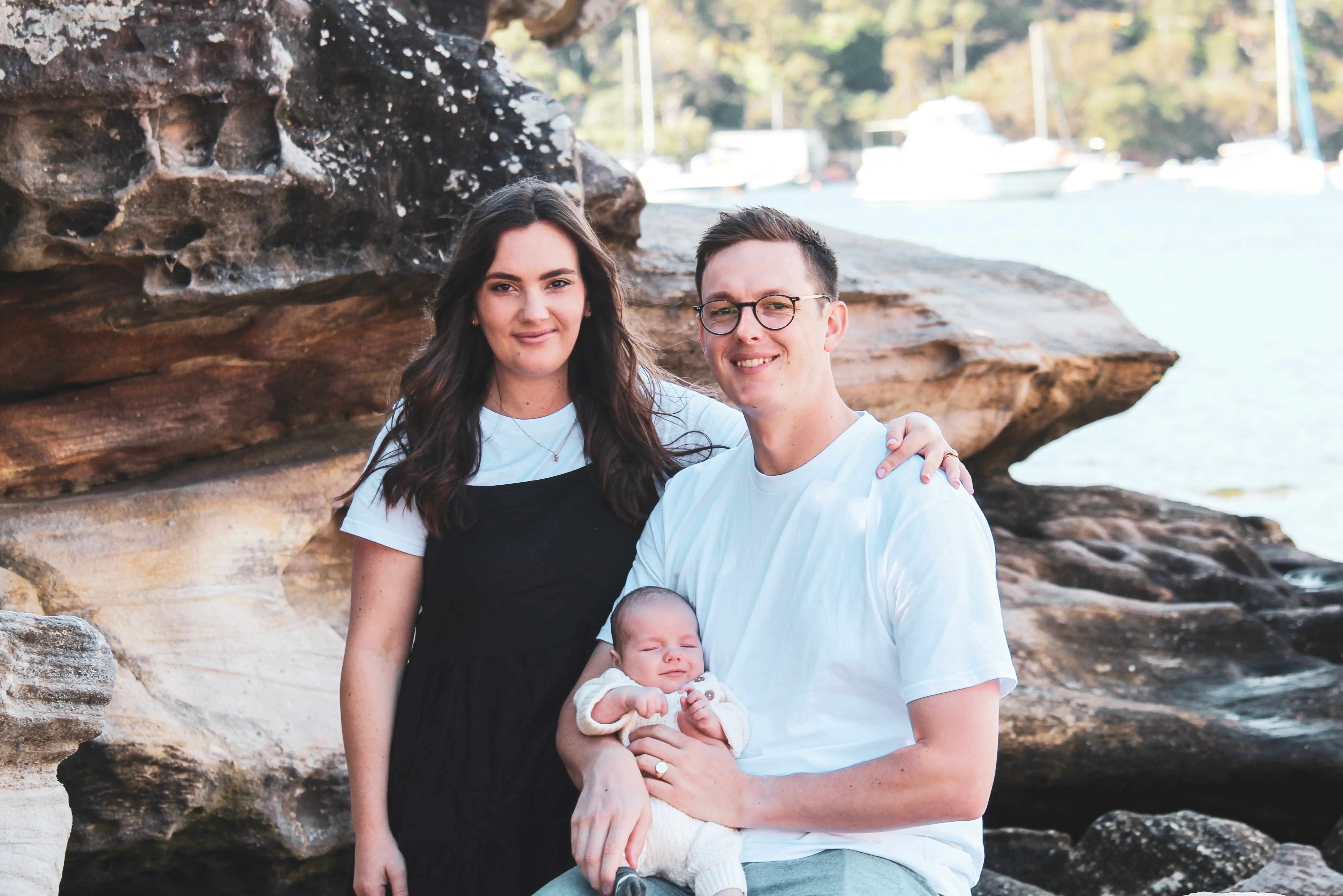
Jasmine's Story
Please submit your details below and we will be in touch soon.
Related Fact Sheets


Related factsheets

Factsheet
Birth Trauma

Factsheet
What do Babies Really Need?

a new mum's story
this Christmas






%201.webp)


Urgent Help is Available



%201.webp)