Please submit your details below and we will be in touch soon.

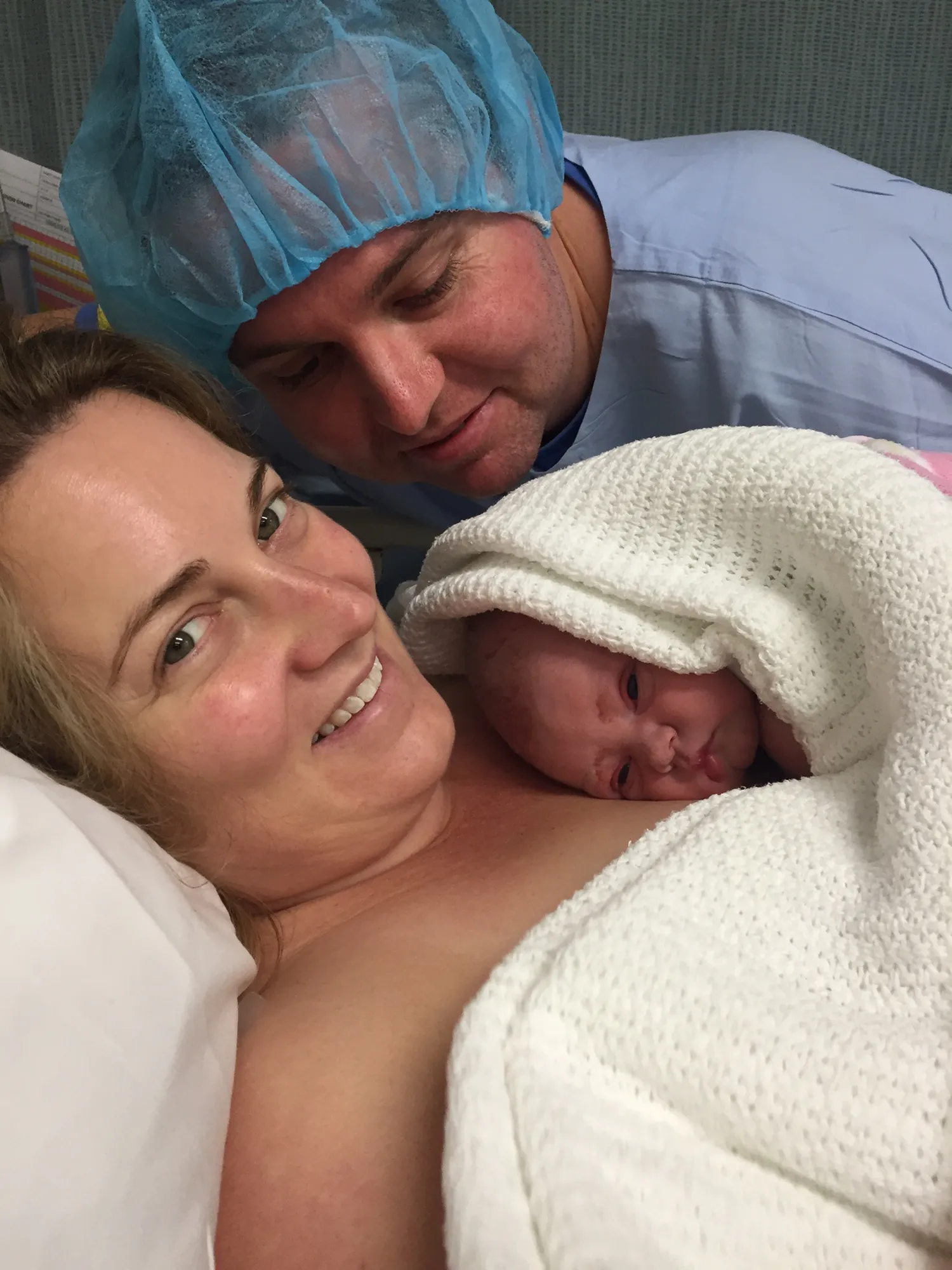
They say when you meet your baby you will be overwhelmed with love. They say the day you meet your baby will be one of the most joyous memories of your life. They say “there is no greater love than a mothers love”.
They don’t tell you that when you see your baby for the first time you might be caught in a limbo of “wait, this is my baby?” and “what is happening to me?”.
The birth of my daughter was a moment I had been waiting for my entire life. I had done ‘all of the research’ and knew the statistics of birth trauma. I had done the birthing class, written the birth preferences, had a continuity of care model…. I had done all the ‘right’ things. I had ticked all the boxes.
Why did birth trauma happen to me? I did all the right things! The days in the lead up to my eventual emergency caesarean section were unexpected, isolating and devastating. I was left grieving, an experience I thought I was robbed of and had dreamt of my entire life.
I first realised I wasn’t okay when I was finally able to stand in the shower alone for the first time and completely broke down in tears. It hit me that I couldn’t be alone with my thought my mind would not stop replaying the moments leading up to the birth.
I could viscerally feel myself being wheeled into theatre, it wasn’t just a memory, it felt as though I was there again and I could feel it in my body. My heart rate would rise, tears in my eyes, deep feeling in my stomach, tight chest, my neck and airway closing up.
Postnatal Post-Traumatic Stress Disorder (PTSD), for me, looked like constantly picturing and reliving those moments on a loop, whilst trying to manage being a first time mum and the challenges that come with that. There was never a sense of calm in my mind. Nights were the hardest, I would replay everything from start to finish, crying until I eventually fell asleep, only to be awake an hour or two later with my newborn and forced to relive it all over again.
I became consumed by researching my birth, desperately trying to piece together what had happened. I was angry - at the hospital, at my midwife, at the world. Why did this happen to me? I felt completely overtaken by it. At the same time, I didn’t want to talk about it or confront it, but my brain wouldn’t switch off.
It felt like I wasn’t allowed peace. More than that, I felt like I didn’t deserve peace. I convinced myself it was my fault, that I must have done something to deserve this, that I had failed myself and failed my daughter. I apologised to her over and over again. I felt an overwhelming sense of guilt and deep shame. I felt profoundly let down, yet at the same time I struggled to share that with my friends. I have always been aware of what post-natal depression and anxiety was, as I had been very grateful that my own mother was incredibly open about her personal struggles with post-natal depression. I had never felt a stigma around it and I was well informed on what it looked like. However, when it was happening to me, for some reason I couldn’t see past the fog and I didn’t realise what was truly happening.
It seemed like I was surrounded by women who had beautiful birth experiences, and I quietly questioned whether I was somehow less of a mother because I didn’t. I truly believed that I was inadequate - that my daughter had been ripped off by ending up with me. I was afraid of what people thought. Why was I so upset? Why was I so traumatised? I convinced myself that something must be fundamentally wrong with me, and that I should feel ashamed for not coping better.
My GP was the first person who truly saw the weight I was carrying. After my initial postnatal check-up, she gently said, “Wow, that is a lot to carry,” and called me back in for another appointment specifically to talk about my mental health. She has become such a champion in my story. My husband was also an incredible support, always listening, never dismissing my feelings, standing beside me through every hurdle.
Being validated felt comforting, but securing help was much harder than I expected. My GP gave me a list of psychologists, and I remember calling each one, crying down the phone, begging for help. I was desperate and I knew I didn’t want to keep feeling this way. This wasn’t something I wanted to be trapped in. But one by one, they told me they had no availability for months. Each 'no' felt like another blow. I had finally gathered the courage to reach out, only to hit a wall.
After that, I pushed it all down again. I suffered quietly, sometimes with my husband as my only safe place to land, and sometimes completely in silence. The nights never changed. My mind continued to replay my birth over and over, relentless and inescapable. I remember lying on the lounge one night when my phone rang. It was my GP. “Hi Bethany,” she said, “I can’t stop thinking about how you’re going. I hope you don’t mind, but I really think you should pursue Gidget Foundation Australia.”
That phone call meant more than she probably realised, someone was still thinking about me, still advocating for me, even when I had started to retreat inward. She didn’t stop there. She also called my husband to explain what Gidget Foundation Australia does, making sure he was fully equipped to support me in pursuing help. I submitted my referral, and to my surprise, I was accepted much sooner than I had expected. For the first time in a while, it felt like a door had opened instead of closing.
At my first appointment, I was nervous, teary and visibly shaken. My Gidget Clinician, however, was calm and steady in a way that felt almost like she was saying, “I know you’re scared, but I’m not.” That steadiness allowed me to soften. For the first time, I felt truly safe telling my whole story.
As I spoke, I felt something shift, a lightness I hadn’t felt in months. The weeks that followed weren’t linear. There were ups and downs, twists and turns, moments where it all felt close to the surface again. But with each session, I felt a little stronger, a little steadier. She also introduced me to the book How to Heal a Bad Birth, which felt deeply validating and became another important part of my healing journey. She supported me through so many parts of my healing, supporting me while reading through my birth notes and helping me organise a debrief with the hospital.
Bit by bit, I began to understand that this wasn’t my fault and I had done the very best I could with the situation I was given. I came to see that even in the hardest moments, I had been advocating for my baby. I had made vital decisions, even when they were difficult and came at a cost to me, that ensured she arrived safely in my arms. That was not failure, that was motherhood.
I slowly stopped comparing my birth to my friends’. They weren’t facing the circumstances I was. I did the best I could with what I had. I wish someone had told me that I was allowed to feel what I felt and that I was allowed to experience the full weight of the emotions, the thoughts, the grief and the anger. That it wasn’t shameful to talk about it. That there was nothing wrong with me for being so deeply impacted by my birth.
Strength looks different to me now. Strength is reaching out. Strength is admitting you’re not okay. Strength is knowing you don’t have to carry it alone and asking for help when you need it. I owe so much of my healing to my incredible GP, my beautiful husband, my incredibly brave mum who has always been open and forthcoming with her own mental health, in the hope it wouldn’t impact her children in the same way and my amazing daughter who, in her own way, has taught me to be strong yet soft, feisty yet kind and determined yet understanding, just like she is. She is my world and when they say there is no greater love than a mother’s love, they mean it. Just because it doesn’t happen instantly, it does not mean it won't happen. I love her more than I ever could have dreamed.
Bethany's Story
Please submit your details below and we will be in touch soon.
Related Fact Sheets


Related factsheets



a new mum's story
this Christmas









Urgent Help is Available



%201.webp)