
Please submit your details below and we will be in touch soon.

When I became a mother, it was the happiest time of my life. I had my children later in life - my eldest daughter was born two days before my 38th birthday, my second daughter at 40, and then our son completed our little family. I had everything I had ever dreamed of. Three healthy children, a loving husband, a beautiful home, a successful career. From the outside, my life looked perfect. And in so many ways, it was.
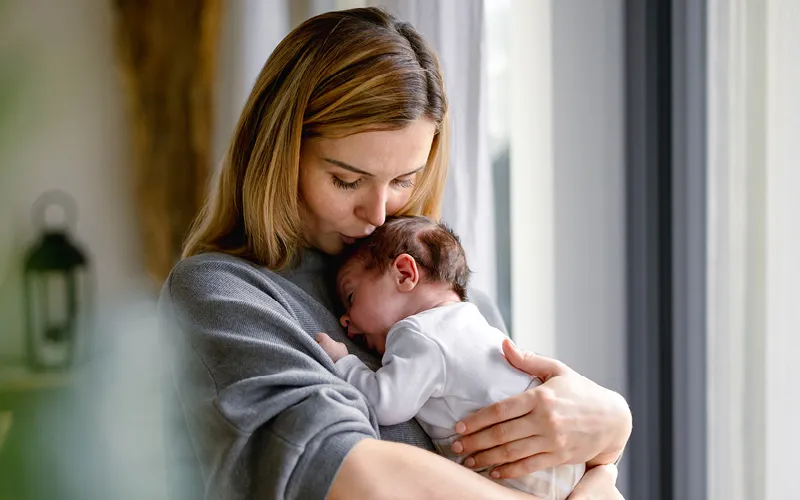
I adored being a mother. I loved pregnancy. I loved breastfeeding. I loved those tiny newborn cuddles, the chaos of family life, the laughter, the bedtime stories, the little hands wrapped around my neck. My children became my entire world.
But somewhere amongst the sleepless nights, the pressure I put on myself to be everything to everyone, and the relentless pace of motherhood, I slowly stopped recognising myself.
At first, it was subtle. I told myself I was just tired. Every mother is tired, right? But the exhaustion became something deeper. I started waking each day with a feeling of dread I couldn’t explain. I felt anxious all the time. Overwhelmed. Restless. Detached. I couldn’t switch off. Even when the children slept, I couldn’t rest because my mind wouldn’t stop racing. I had three children under five and I didn’t properly sleep for years. I was trying so hard to hold everything together. To be the perfect mum, wife, TV presenter, friend - that I completely stopped checking in with myself.
The hardest part was that I didn’t understand why this was happening to me. I looked around at my beautiful life and thought: “What is wrong with me?” I had so much gratitude, yet I felt deeply sad. I couldn’t make sense of it. I felt guilty for struggling because I believed I should have been happy.
So, I suffered in silence.
I became very good at masking what was really going on. I would smile, work, socialise and carry on as though everything was fine, while privately I was falling apart. Eventually, like a house of cards in a windstorm, everything collapsed.
My anxiety escalated into panic attacks. I started self-medicating with alcohol just to take the edge off the feelings I couldn’t escape. What began as trying to cope slowly became its own battle. There were periods where I became so unwell I needed hospitalisation. My marriage broke down. There were times I wasn’t able to properly care for my children and as a mother, that shattered me. I remember thinking, “How did I get here?”
That is the reality of perinatal depression and anxiety (PNDA) that people often don’t talk about enough. In my experience, it doesn’t always look obvious. For me, it crept in quietly while I continued functioning, smiling and trying to be everything for everyone else.
Looking back now, I can see I was desperately trying to survive while pretending I was okay. And I know there are so many women doing exactly that right now. What changed my life was finally being honest. Honest with myself. Honest with the people who loved me. Honest enough to ask for help.
Healing didn’t happen overnight. It took years. Therapy. Self-reflection. Support. Learning to stop punishing myself for struggling. Learning that being a good mother didn’t mean sacrificing myself completely. Most importantly, I learned that there is no shame in not coping.
Motherhood is beautiful, but it can also be incredibly overwhelming, isolating and emotionally demanding. We prepare women for birth, but not nearly enough for the enormous mental, emotional and physical transformation that comes after. During those times I often thought, “I got the baby handbook. I didn’t get the handbook for what happens to the mother.”
That’s why the work of Gidget Foundation Australia is so important. I didn’t receive help from Gidget Foundation Australia when I was going through PNDA, and I wish I had. That’s one of the reasons I feel so passionate about supporting their work now… because no woman should feel as alone as I did.
Today, I can honestly say I’m stronger and more self-aware than I’ve ever been. Not because of what happened to me. But because I finally learned how to be kind to myself.
And if there’s one thing I want other women to know, it’s this:
You are not failing because you are struggling.
You are not weak for needing help.
And no matter how dark it feels, there is always a way through.
Yvette's Story
Please submit your details below and we will be in touch soon.
Related Fact Sheets




a new mum's story
this Christmas




.webp)





Urgent Help is Available



%201.webp)