


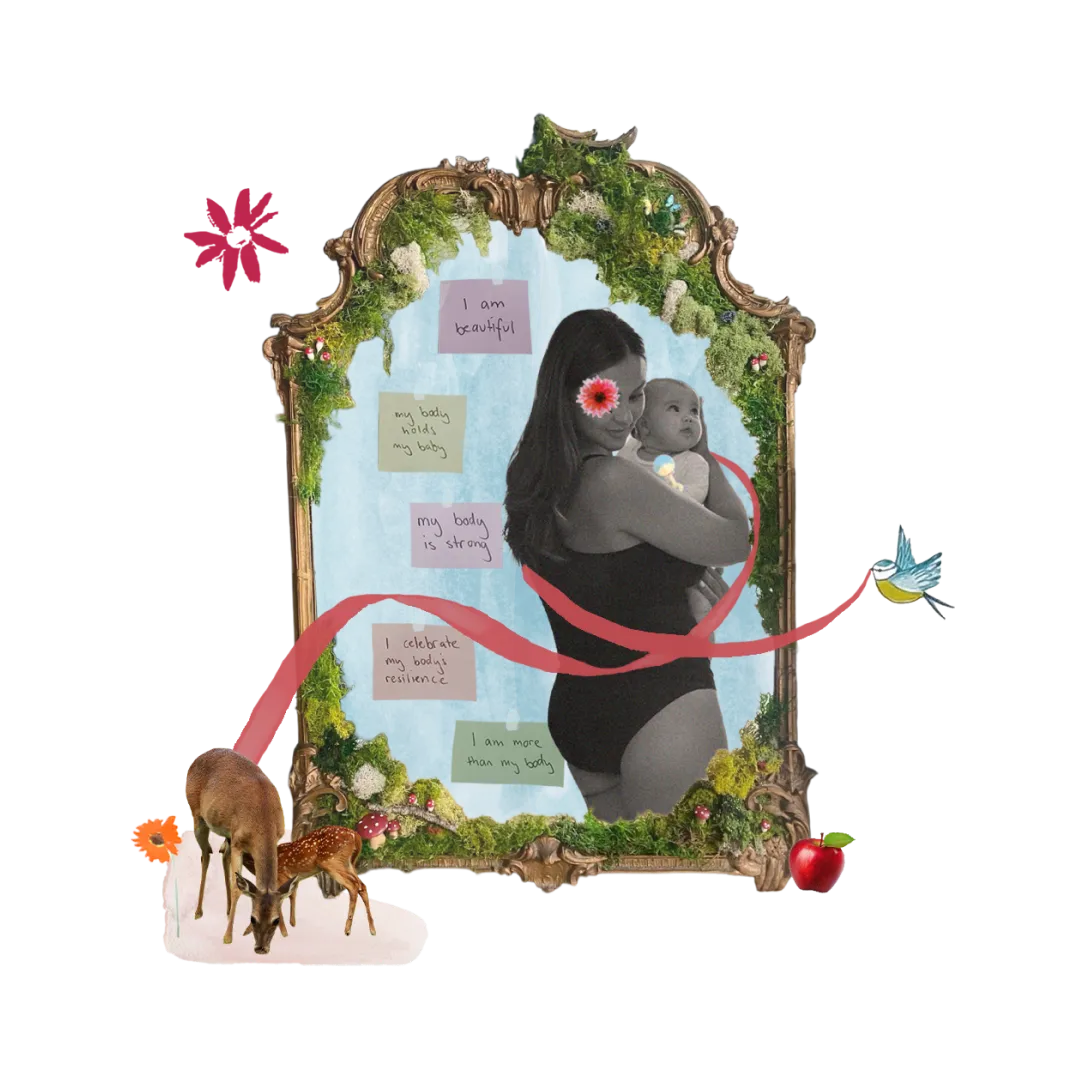
The way a woman’s body transforms during pregnancy and birth is profound and beautiful. But to a new mum, her body can feel foreign and even painful.
When a baby is born, there is so much awe surrounding the new life that it can be difficult for a mother to share her feelings about the body that created it.
The extra weight, loose skin and hair loss, are all changes most mothers experience, but many don’t speak about because of shame or guilt.
When Psychologist Dr. Pree Benton, from She Speaks Psychology, meets with postpartum women, many say the same thing about their bodies.
“I often hear, ‘I don’t feel like myself’, or ‘I want to feel like me again’, there is a lot of self-judgment about ‘carrying extra weight’,” she says.
“Research shows body dissatisfaction increases in postpartum. This association, or the strength of it, depends on factors such as a woman’s self-worth, support around them… and the messaging they are hearing about their body and physical changes.”
Having a positive body image can help a mum avoid mood disorders, but self-love isn’t always easy. If you’re struggling with body image, there are ways to feel better.
"...the postpartum message to ‘bounce back’ is still strong in society..."
Body changes after pregnancy and birth
While no two bodies are the same, everyone is going to experience some physical changes in pregnancy and birth.
Women with a diagnosed eating disorder should seek medical advice before getting pregnant. With support, they can transition to a healthy pregnancy and postpartum.
Body changes in pregnancy include:
- Changes to breast size and areola colour
- Weight gain and uneven weight distribution
- Fluid retention (swelling)
- Varicose veins
- Stretch marks
- Skin changes like acne, melasma and skin tags
Body changes after birth include:
- Loose skin, stretch marks, and C-section scars
- Further breast changes and engorgement
- Separation of abdominal muscles, diastasis recti, a change in stomach appearance
- Postpartum hair loss
- Bladder leakage and constipation
- Night sweats and sweating
- Vaginal bleeding and discomfort in perineal area
- Genital changes e.g. vulval varicose veins, prolapse
What impact can low body image have on a woman
If you feel disconnected from your pre-baby self or sad about not having the same pre-pregnancy body, you are not alone and it does not mean you love your baby any less.
Below are ways a woman’s body changes can impact her:
- Reduced sex drive/lower confidence to be intimate
- Impact on overall self-worth, especially if worry with weight is high
- Avoiding socialising
- Avoiding exercise
- Research has linked low body satisfaction with depressive symptoms
- Studies show women with low body satisfaction are more likely to engage in disordered eating and be at risk for eating disorders in postpartum
"...it can be difficult for a mother to share her feelings about the body that created it."
The pressure to ‘bounce back’ can harm a mum’s positive body image
Psychologist Dr. Pree Benton says the postpartum message to ‘bounce back’ is still strong in society making it difficult for women to escape pressure around how they look.
“It has been rebranded in many ways like; ‘bounce forward’ and ‘reclaim your body’, to sound more positive and ‘healthy’,” she says.
“However, the underlying diet culture persists, with the message being that your body needs to change from something other than its postpartum state, primarily a thinner, or more fit or toned body.”
Reasons this message is dangerous:
- ‘Bounce back culture’ may encourage restrictive eating and over-exercising. Research has found a link between disordered eating and a negative impact on infant development, and later disordered eating in the child, and mother.
- Engaging in restrictive eating practices or excessive exercise can lead to exhaustion and nutrient deficiencies, which can impair postpartum recovery.
- If breastfeeding, restricting food intake or over-exercising can reduce milk supply and nutrition to the baby.
- It sends a message of shame to women. There is so much pressure on mothers to be perfect, with ‘bounce back culture’ being a strong part of this ideal. For example, ‘a good mother should be fit and healthy’. This can be positive, but it can slip into disordered patterns if driven by thin ideal and fat phobia.
- Everybody responds differently to having a baby. Some people will have their body return to exactly what it was, with seemingly no effort, and others change forever. Genetics and age are a huge factor, and both are out of a woman’s control.
You don’t feel like the ‘old you’, but there is beauty in this
Longing for an ‘older’ version of yourself after birth is a common feeling. But Dr Benton reminds women the transformation into motherhood is more than just physical.
“The idea of ‘not feeling myself’ is so complex, of course we don’t feel like ourselves before we had children, we are completely new people,” she says.
“Our brains have changed, our values change, our relationships change. Why would our body go back to what it was before? Why should we hide these changes when they mark the incredible feat that our bodies have done in growing an entire human?”
“Matrescence (a term for the physical, emotional and psychological changes that occur in motherhood) is not a mainstream concept, and this contributes to women being drawn to the idea that we’re meant to be the same person as before becoming a mother.”
"It’s never too soon to be building positive body image and self-worth, pregnant or not."
How to reconnect with your body after having a baby
Dr Benton has shared ways women can work towards a healthy body image:
- Do exercise that you enjoy (not what you think you should do). Do it with others for social benefit, like going for a walk with a friend. Or join a gym that caters for mums and kids. On the flip side, avoid exercise programs and spaces that endorse ‘bouncing back’ and diet culture.
- Practise self-compassion. Use mantras such as, ‘may I accept myself as I am’, or ‘may I be kind to my body and thankful for the child it’s given me’.
- Be grateful for your body’s function – not appearance. Acknowledge what your body has done, such as how it gave you a child, healed from pregnancy and birth, or keeps you going despite sleep deprivation. This practice may not be helpful if a woman has suffered loss, birth trauma or breastfeeding struggles. In this case, try gratitude for a heart that keeps you alive, and arms to rock a baby.
- Learn to eat intuitively. Research shows postpartum women who are intuitive eaters are more likely to be satisfied with their bodies, less likely to have an eating disorder, and score lower in depressive symptomology compared with mums who restrict eating. Dieticians and psychologists can help with plans.
- Connect with parts of yourself – that aren’t your body. Strengthen relationships by talking to loved ones or making a meal for a friend who’s had a baby. Read about topics you like or learn a skill or hobby. This is hard in early postpartum, so instead try acknowledging small tasks ticked off in the day like a walk, laundry or connecting with your baby.
- Buy new clothes that fit and ignore the size label. Nothing will make you feel bad about your body quicker than trying to wear clothes that aren’t right, right now. Acknowledging this comes with privilege; if funds are an issue, try op-shopping and preloved markets, or invest in a few items you feel comfortable and good in. Consider donating your old clothes. You’re not just clearing physical space; you’re clearing emotional and mental space as you won’t be constantly reminded of it. There is joy in knowing it will be given a second life and loved by someone else.
- Start talking kindly to yourself before birth. It’s never too soon to be building positive body image and self-worth, pregnant or not. Research suggests body image can be positive during pregnancy, so monopolising on this could assist in buffering against body dissatisfaction in postpartum.
- Find your safe village. Stay connected and speak openly with loved ones. Seek professional therapy for any mental health concerns.
Remember, your body has changed because it’s carried you through one of the biggest transformations a woman can experience. Be gentle with yourself as you navigate this new identity and try talking about it with other new mums or people you trust. You might be comforted to know other new mums share the same feelings, so you don’t have to hold it all alone.


.webp)

.png)

